单选题 中学教育理论综合
2022-09-20

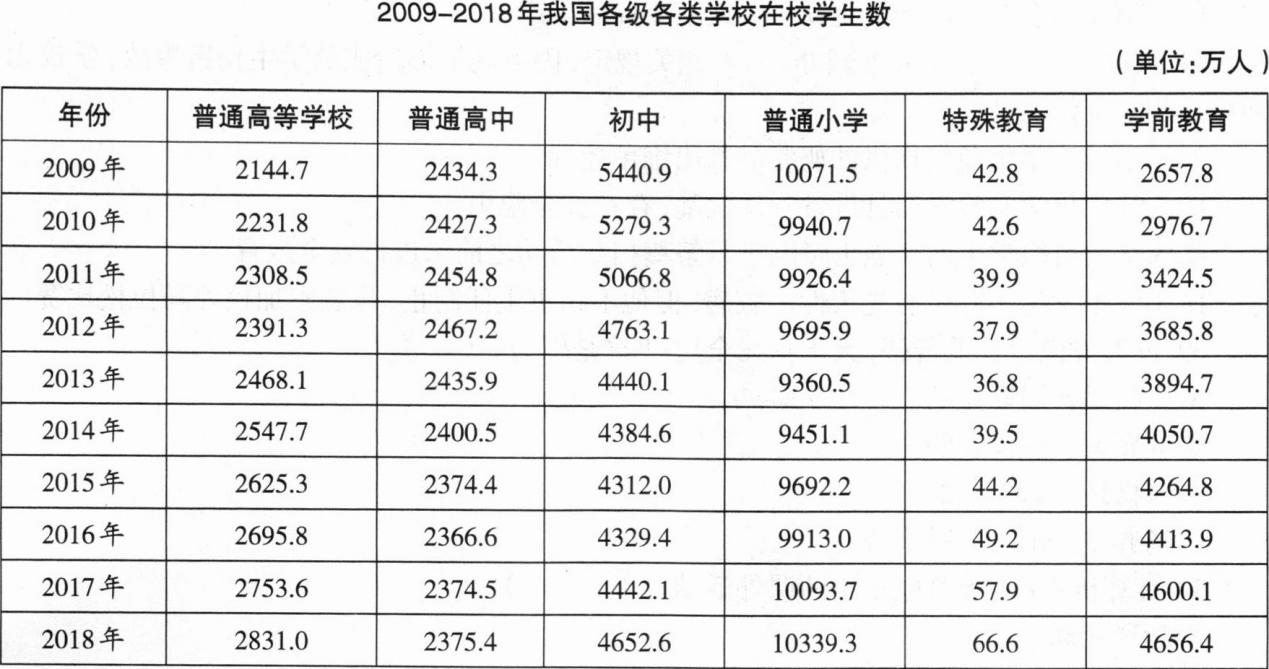
根据以下资料回答第37、38题。2018年我国各级各类学校在校学生数同比增加()。
A.603.7万人
B.599.4万人
C.574.5万人
D.580.9万人

参考答案

B

答案解析

根据表格最后两行可知,所求为(2831.0+2375.4+4652.6+10339.3+66.6+4656.4)一(2753.6+2374.5+4442.1+10093.7+57.9+4600.1)观察选项末位数字各不相同,因此只计算末位数字即可。0+4+6+3+6+4=23,6+5+1+7+9+1=29,则2018年数据的末位数字是3,2017年数据的末位数字是9。不够减时向前借一位,13—9=4。B项正确。

你可能感兴趣的试题

A.2009--2018年初中的在校生人数逐年递减
B.2009--2013年普通小学在校生人数年均减少超过200万人
C.2016--2018年特殊教育在校生人数较上年增长均超过l0%
D.201 1年学前教育在校生人数较上年的同比增长量不到普通高等学校的5倍
2 根据以下资料回答第39、40题。
 When you make a mistake, big or small, cherish it like it's the most precious thing in theworld, because in some ways, it is. 
Most of us feel bad when we make mistakes, beat ourselves up about it, feel like failures, getmad at ourselves. 
And that's only natural: Most of us have been taught from a young age that mistakes are bad,that we should try to avoid mistakes. We've been scolded when we make mistakes at home, schooland work. Maybe not always, but probably enough times to make feeling bad about mistakes anunconscious reaction. 
Yet without mistakes, we could not learn or grow. If you think about it that way, mistakesshould be cherished and celebrated for being one of the most amazing things in the world: theymake learning possible; they make growth and improvement possible. 
By trial and error——trying things, making mistakes, and 16arning from those mistakes--wehave figured out how to make electric light, to paint the ceiling of the Sistine Chapel, to fly. 
Mistakes make walking possible for the smallest toddler, make speech possible, make worksof genius possible. 
Think about how we learn: We don't just consume information about something and instantlyknow it or know how to do it. You don't just read about painting, or writing, or computerprogramming, or baking, or playing the piano, and know how to do them right away. Instead, youget information about something, from reading or from another person or from observing usually,then you construct a model in your mind, then you test it out by trying it in the real world, then youmake mistakes, then you revise the model based on the results of your real-world experimentationand repeat, making mistakes, learning from those mistakes, until you've pretty much learned howto do something. That's how we learn as babies and toddlers, and how we learn as adults. Mistakesare how we learn to do something new, because if you succeed in something, it's probablysomething you have already known how to do. You haven't really grown much from that success--at most it's the last step on your journey, not the whole journey. Most of the journey was made upof mistakes, if it's a good journey.
 So if you value learning, if you value growing and improving, then you should value mistakes.They are amazing things that make a world of brilliance possible.
Why do most of us feel bad about making mistakes?
A.It's a natural part in our life.
B. Mistakes make us suffer a lot.
C. We've been taught so from a young age.
D. Mistakes have ruined many people's careers.
A.We should try to avoid making mistakes.
B. We should treat mistakes as good chances to learn.
C. We should owe great inventions mainly to mistakes.
D. We should make feeling bad about mistakes an unconscious reaction.