单选题
公共英语五级
2016-08-09
根据下面资料,回答题
Note: Answer each question by choosing A, B, C or D and mark it on ANSWER SHEET 1. Some choices may be required more than once.
A = BOOK 1
B = BOOK 2
C = BOOK 3
D = BOOK 4
Which book(s) say(s) that...

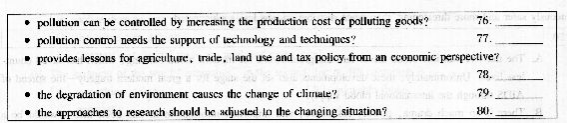

BOOK 1
The book offers a comprehensive perspective on the consequences and possible policy solutions for climatic change as we move into the twenty-first century. It assesses the impact of potential feature global climate change on agriculture and the need to sustain agricultural growth for the economic development.
The book begins by examining the role of international research institutions in overcoming environmental constraints on sustainable agricultural growth and economic development. The authors then discuss how agricultural research systems may be restructured to respond to global environmental problems such as climate change-and loss of genetic diversity. The discussion then extends to consider environmental accounting and indexing, to illustrate how environmental quality can be included formally in measures of national income, social welfare and sustainability. The third part of the book focuses on the effects of and policy responses to climate change. Chaptes in this part examine the effect of climate change on production, trade, land use patterns and livelihoods. They consider impacts on the distribution of income between developed and developing countries remain a major economic activity. Authors take on an economy-wide perspective to &aw lessons for agriculture, trade, land use and tax policy.

BOOK 2
The ozooe layer is by chemical emissions; the climate is endangered from fossil and deforestation, and global biodiversity is being lost by reason of thousands of years of habitat conversions. Global environmental problems arise out of the accumulated impacts from many years' and many countries' economic development. In order to address these problems the states of the world must cooperate to manage their development proces-ses together--this is what an international environmental agreement must do. But can the world' s countries cooperate successfully to manage global development? How should they manage it? Who should pay for the process, as well as for the underlying problems?
This book presents an examination of both the problem and the process underlying intematioual environmental lawmaking: the recognition of international interdependence, the negotiation of international agreements and the evo- lution of international resource management. It examines the general problem of global resource management by means of general principles and case studies and by looking at how and why specific negotiations and agreements have failed to achieve their targets.
The book is designed as an introductory text for those studying global environmental policy making and institu- tion building. It will also be of interest to practitioners and policy makers and scholars in the areas of environmental economics and law

BOOK 3
Industrialization to achieve economic development has resulted in global environmental degradation.
While the impacts of industrial activity on the natural environment are a major concern in developed countries, much less is known about these impacts in developing countries. This source book identifies and quantifies the environmen- tal consequences of industrial growth, and provides policy advice, including the use of clean technologies and envi- ronmentally sound production techniques, with special reference to the developing world.
The developing world is often seen as having a high percentage of heavily polluting activities within its industrial sector. This, combined with a substantial agriculture sector, which contributes to deforestation, the erosion of the top soil and desertification, has led to extreme pressures on the environment and impoverishes the population by de- stroying its natural resource brase. This crisis suggests that sound industrialization policies are of paramount impor- tance in developing countries' economic development, and calls for the management of natural resources and the a- doption of low-waste of environmentally clean technologies.
The authors consider the industrial sector as a pollutant to other sectors of the economy, and then focus on some industrial-specific pollutants within the manufacturing sector and some process-specific idustrial pollutants. They conclude by reviewing the economic implications of promoting environmentally sound industrial development, spe- cially adressing the question of the conflict or complementarily which may exist between environmental goods and in- dustrial production.
 BOOK 4
This is an important book which presents new concepts of the marginal cost of substituting non-poilutive for pollutive goods. Technically in its approach it complements the other literature in the field and will be a sig- nificant contr
ibution to the understanding of microec0nomic issues in pollution control. The book focuses on the three main concepts: substitutions in consumption, emission abatement and exposure avoidance. The first part considers the adjustment of the scope and combination of goods produced as a method for controlling pollution.
The author argues that pollution is controlled by increasing the relative price of the polluting goods in the pro- duction process, thereby reducing demand and subsequent production of the goods. In the second part, the discus- sion is extended to include the possibilities of preventing or abating emissions in relation to three models: f'n-st, pol- lution prevention when non-pdluting inputs and processes are substituted for pollutants; second, when a proportion of the polluting output is recycled rather than being discarded; and finally end-of-pipe abatement where additional technology is used. In conclusion, the author assesses the extent to which pollution damage is controlled by avoid- ance of emissions, with avoidance being modeled as an add-on technology with its own returns to scale.
第(71)题答案
BOOK 1
The book begins by examining the role of international research institutions in overcoming environmental constraints on sustainable agricultural growth and economic development. The authors then discuss how agricultural research systems may be restructured to respond to global environmental problems such as climate change-and loss of genetic diversity. The discussion then extends to consider environmental accounting and indexing, to illustrate how environmental quality can be included formally in measures of national income, social welfare and sustainability. The third part of the book focuses on the effects of and policy responses to climate change. Chaptes in this part examine the effect of climate change on production, trade, land use patterns and livelihoods. They consider impacts on the distribution of income between developed and developing countries remain a major economic activity. Authors take on an economy-wide perspective to &aw lessons for agriculture, trade, land use and tax policy.
BOOK 2
This book presents an examination of both the problem and the process underlying intematioual environmental lawmaking: the recognition of international interdependence, the negotiation of international agreements and the evo- lution of international resource management. It examines the general problem of global resource management by means of general principles and case studies and by looking at how and why specific negotiations and agreements have failed to achieve their targets.
The book is designed as an introductory text for those studying global environmental policy making and institu- tion building. It will also be of interest to practitioners and policy makers and scholars in the areas of environmental economics and law
BOOK 3
Industrialization to achieve economic development has resulted in global environmental degradation.
参考答案
A
答案解析
短文赏析
A
这本书介绍了进入21世纪后,气候变化会带来的各种后果和应对措施。重点是说明全球气温变化给农业发展带来的后果以及最终对经济发展的影响。作者首先评价了国际研究院在克服环境对农业及经济持续发展的局限性上的作用,接着讲述了农业应该如何重组来适应环境的变换以及物种的减少,第三部分主要讲述了气候变化所带来的影响和各种应
对措施。作者还从经济的角度出发,对农业的发展,贸易的深入,土地的使用,以及税收政策的制定提出建议。
B
这本书指出臭氧层空洞、气候的变换、物种的灭绝等全球问题都是由于多年来各个国家经济发展造成的。要想解决这些环境问题,国际社会必须加强合作。同时,这本书审查了国际环境法在制定过程中存在的问题以及程序。这本入门读物主要是为研究全球环境政策的制定以及环保机构建立的人员编写的。
C
这本书指出工业化促进了经济的发展,却导致了环境的恶化。工业活动所带来的问题在一些发展中国家依然没有引起重视。通过对工业发展给环境带来的后果的界定,这本书提出了一些建议,特别对那些发展中国家。这些问题很大程度上是由于不合理的经济发展道路造成的。作者指出工业发展的政策是至关重要的,但要科学管理自然资源,采取净化环境的低耗能的科学技术才是解决问题的道路。
D
这本书提出了一种非污染商品取代污染商品的边际成本的新概念,这种设想填补了其他文献在此领域的空白,有助于更好的理解污染控制的微观经济问题。本书主要说明了三个问题:替代消费问题、消减排放问题以及回避宣传问题。
答案及解析
A【解析】由A中的第一段最后一句话“It assesses the impact of P0—tential feature global climate change on agriculture and the need to sustain agricultural growth...”可知。
A
这本书介绍了进入21世纪后,气候变化会带来的各种后果和应对措施。重点是说明全球气温变化给农业发展带来的后果以及最终对经济发展的影响。作者首先评价了国际研究院在克服环境对农业及经济持续发展的局限性上的作用,接着讲述了农业应该如何重组来适应环境的变换以及物种的减少,第三部分主要讲述了气候变化所带来的影响和各种应
对措施。作者还从经济的角度出发,对农业的发展,贸易的深入,土地的使用,以及税收政策的制定提出建议。
B
这本书指出臭氧层空洞、气候的变换、物种的灭绝等全球问题都是由于多年来各个国家经济发展造成的。要想解决这些环境问题,国际社会必须加强合作。同时,这本书审查了国际环境法在制定过程中存在的问题以及程序。这本入门读物主要是为研究全球环境政策的制定以及环保机构建立的人员编写的。
C
这本书指出工业化促进了经济的发展,却导致了环境的恶化。工业活动所带来的问题在一些发展中国家依然没有引起重视。通过对工业发展给环境带来的后果的界定,这本书提出了一些建议,特别对那些发展中国家。这些问题很大程度上是由于不合理的经济发展道路造成的。作者指出工业发展的政策是至关重要的,但要科学管理自然资源,采取净化环境的低耗能的科学技术才是解决问题的道路。
D
这本书提出了一种非污染商品取代污染商品的边际成本的新概念,这种设想填补了其他文献在此领域的空白,有助于更好的理解污染控制的微观经济问题。本书主要说明了三个问题:替代消费问题、消减排放问题以及回避宣传问题。
答案及解析
A【解析】由A中的第一段最后一句话“It assesses the impact of P0—tential feature global climate change on agriculture and the need to sustain agricultural growth...”可知。